
Why most breakouts fail
The first break of a level is usually liquidity, not a new trend. Here's how to tell the difference.
You've seen it a hundred times. Price grinds into resistance, tests it three times, then finally breaks through. You buy the breakout. Two candles later price is back inside the range and your stop is gone.
That isn't bad luck. It's how the market is built, and once you see why, you'll stop being the liquidity.
A tested level is a pile of orders
Every time price taps a level and fails, more traders notice it. Sellers start shorting the level and put their stop losses just above it. Breakout traders place buy-stop orders just above it, waiting for the break. After three tests, there is a huge stack of buy orders sitting a few pips over that line.
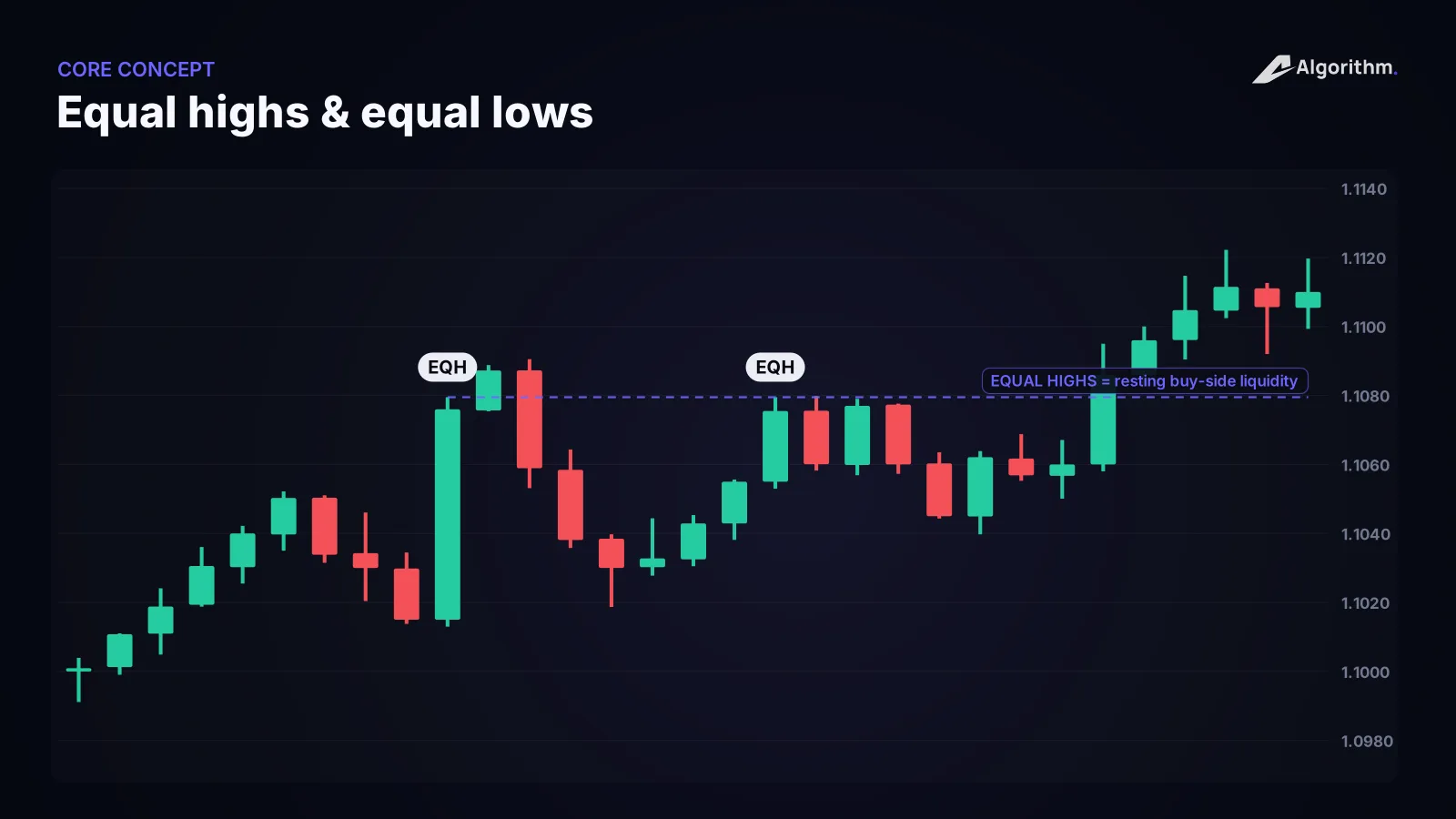
To fill large sell orders, someone needs a lot of buyers at once. That stack above resistance is exactly that. So price pushes through, triggers every stop and breakout order, sells into all that buying, and reverses.
How to tell a sweep from a real breakout
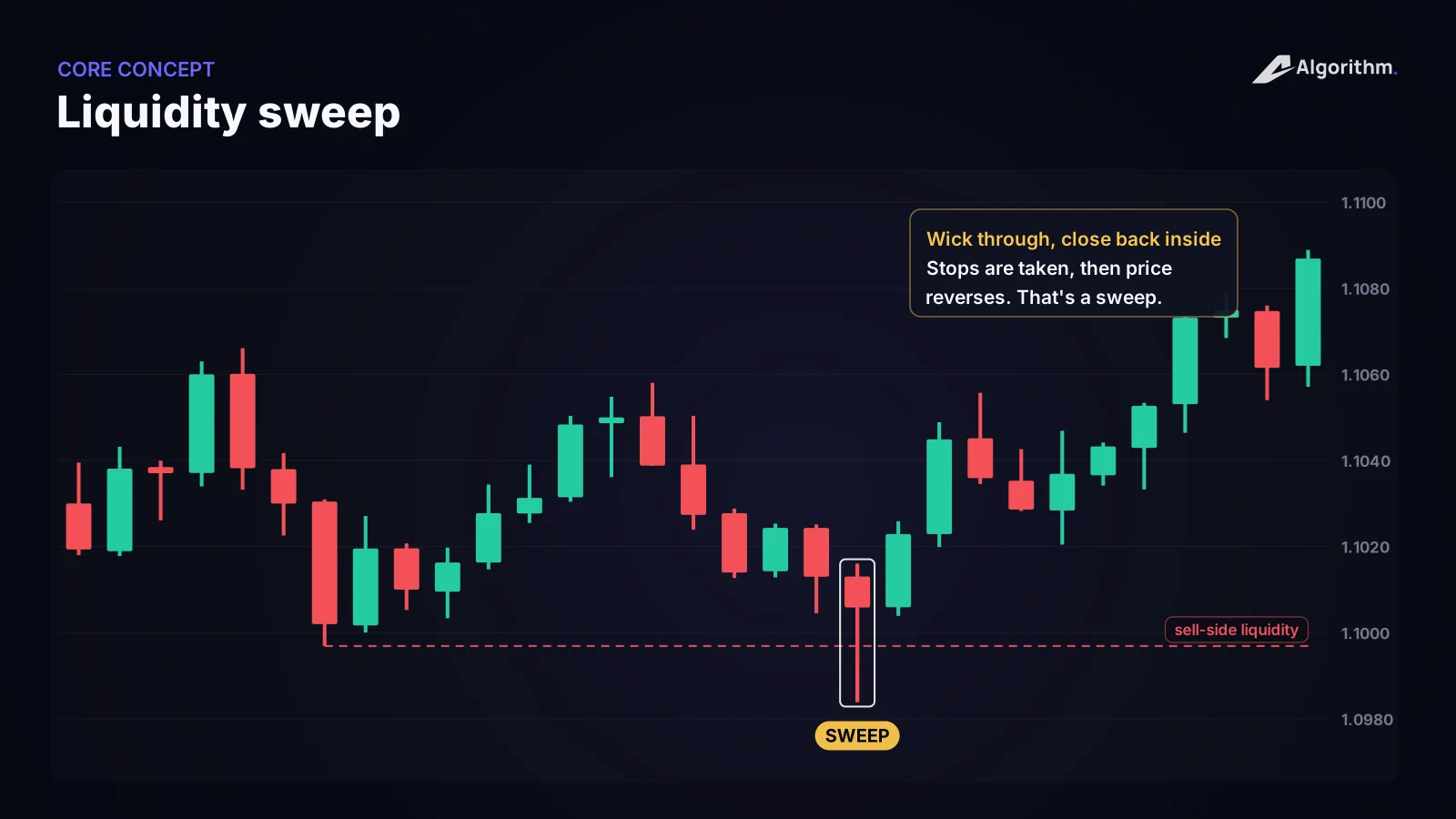
- Watch the close, not the wick. A sweep pokes above the level and closes back inside. A real breakout closes outside and stays there.
- Look for displacement. Real breaks are fast, with big bodies and small wicks. Weak, wicky breaks that stall are suspect.
- Wait for the retest. If the broken level holds as support when price comes back, the break is more likely real. If price slices back through, it was a sweep.
What to do instead
Stop buying the first break. Mark the level, let the market show you its hand, and wait for either a clean retest or a sweep and reversal. Either way, you're trading after the liquidity has been taken, not becoming it.
Read the full breakdowns in the library: Liquidity sweep, Equal highs & equal lows and Displacement.
Get the 28-concept cheat sheet
Every concept on one page: how to spot it, when it fails and the mistakes to avoid. Free PDF, plus new articles when they're out. No spam, unsubscribe anytime.
Talk it through with the community
Share your charts and ask questions in the Discord.
Join the Discord, free